Connectivity
Sydney–Melbourne Fibre: Routes, Latency and Diversity
7 min read
The fibre between Sydney and Melbourne shapes how fast your two sites can replicate and what happens when a cable is cut. Here are the main routes, realistic latency, how to get true route diversity and the questions to ask.
Why the Sydney–Melbourne link matters
Sydney and Melbourne are Australia's two largest data centre markets, and a large share of businesses that run two sites put one in each city. The fibre between them carries replication traffic, backups, cloud connections and everyday user traffic. Vocus says the Sydney–Melbourne corridor carries roughly 40 per cent of Australia's long-haul data traffic.
If you are planning a primary site in one city and a secondary site in the other, the fibre path between them shapes three things: how quickly data can move, how much it costs, and what happens when a cable is cut. This guide explains the main routes, what latency to expect, why route diversity matters and the questions to ask carriers and data centres. For the wider design picture, read our geographic redundancy guide.
The main routes between Sydney and Melbourne
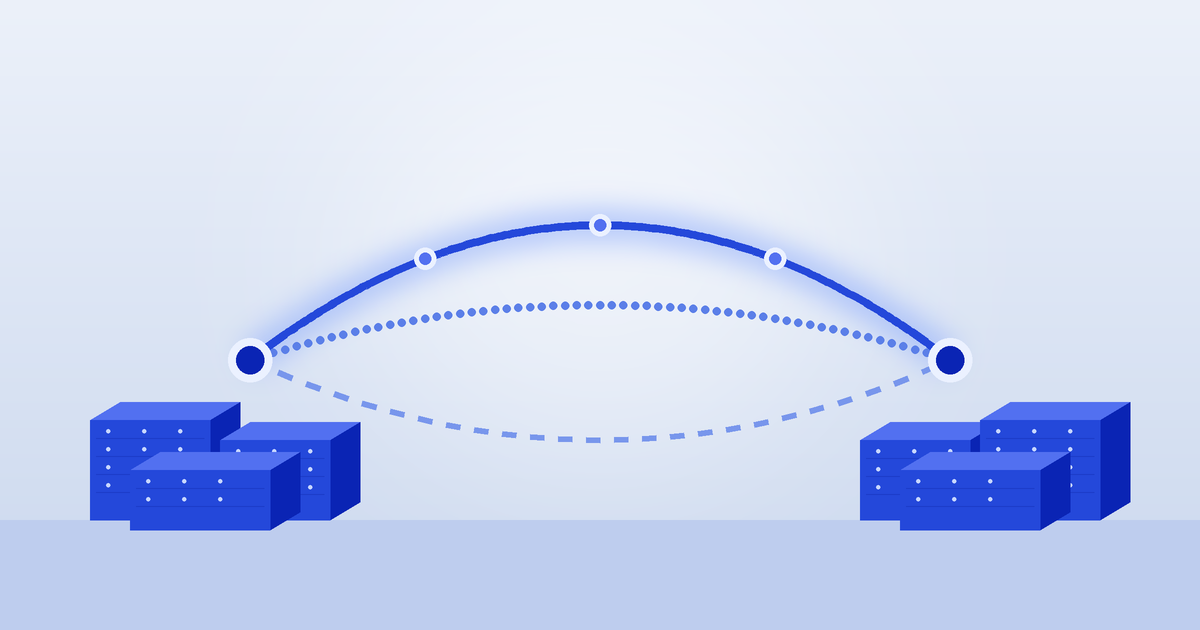
Several carriers run long-haul fibre between the two cities, and their paths fall into a few broad groups:
• Inland and central land routes. These follow the main inland transport corridors, and some pass through Canberra, which also gives a convenient point to connect government and Canberra-based sites. • Coastal land routes. These take a longer path closer to the coast. Telstra InfraCo launched the Sydney to Melbourne coastal route of its new Aura Network (formerly the Intercity Fibre Network) in October 2025, and lists a Sydney–Canberra–Melbourne coastal route and a Sydney–Canberra central route among its ready-for-service routes. • Subsea. SUBCO's SMAP cable, which links Sydney, Melbourne, Adelaide and Perth by sea, was declared ready for service on 25 June 2026. SUBCO describes it as the first submarine cable to land in both Melbourne and Adelaide.
More capacity is on the way. Vocus has announced a new ducted long-haul route between Sydney and Melbourne, designed for up to 3,456 fibre pairs and planned to be ready for service in 2029. A ducted route lets the operator pull in more fibre later without digging the route up again. SUBCO has also announced plans for a land route of its own between the two cities.
You rarely buy "a route" directly. You buy a service, such as a wavelength, an Ethernet link or dark fibre, from a carrier that runs over one or more of these paths. That is why it pays to ask which physical path your service actually uses.
What latency to expect
Latency between the cities is set mostly by physics. Light in standard optical fibre travels at roughly two-thirds of its speed in a vacuum, which works out to about 5 microseconds per kilometre. Sydney and Melbourne are a little over 700 km apart in a straight line, so even a perfectly straight fibre would take about 7 milliseconds for a round trip.
Real cables never run in straight lines. They follow roads, rail lines and coastlines, and traffic passes through equipment at each end. A useful rule of thumb is that every extra 100 km of route adds about 1 millisecond of round-trip time. On a well-routed path, a round trip of around 10 milliseconds is a realistic expectation, and longer coastal or subsea paths will usually sit higher than the most direct inland route.
What does that mean in practice?
• Asynchronous replication, backups and most disaster recovery designs work comfortably at these latencies. • Synchronous replication, where every write must be confirmed at both sites before it completes, is far more sensitive. Check your storage or database vendor's supported latency limits before you design around it. • User-facing applications rarely notice the difference between the two cities.
Treat any latency figure as a measurement on a specific path, not a property of the city pair. Always ask the carrier for the expected round-trip time on the exact route your service will use, and test it once the link is live.
Route diversity: the part buyers often miss
Two links are only as resilient as their physical separation. If your primary and backup services share the same trench, the same bridge or the same building entry, a single backhoe or flood can take out both.
True diversity means:
• Different physical paths for the long-haul section, for example one inland and one coastal or subsea route. • Different entry points into each data centre, ideally through separate building entries and risers. • Different equipment and, where possible, different carriers, so one carrier's outage or configuration error does not affect both links.
Some carriers offer protected services that switch traffic to a second path automatically after a fault. These are useful, but you still need to know where both paths run. Ask for route maps or a written diversity statement rather than relying on the word "diverse" in a quote.
The data centre matters too. A carrier-neutral facility with many carriers on site makes it much easier to buy two genuinely separate services, and to connect them to your equipment with cross-connects. Our connectivity choices guide explains the main service types, from internet transit to private links.
Choosing data centres with the fibre in mind
When you shortlist sites, look at connectivity as closely as power and space. Check which carriers are present in each building, whether your preferred carriers serve both ends, and whether the facility has more than one fibre entry. The DChunt map and coverage page show where facilities sit, and our Sydney and Melbourne pages list local options. If you are still weighing up the second city, our Melbourne data centre options guide covers whether Melbourne works best as a primary or secondary site. You can compare operators in the provider directory.
Questions to ask carriers and data centres
• Which physical route does this service use between Sydney and Melbourne, and can you provide a route map? • What is the expected round-trip latency on that route, and is it covered by the service level agreement? • If we buy two services, where do the paths share any trench, duct, bridge, exchange or building entry? • Is the service protected, and if so, how quickly does it switch paths and what latency applies on the backup path? • Which buildings and building entries does the service use at each data centre? • What are the fault response and restoration commitments for long-haul cable cuts? • Which other carriers are on site at each facility, in case we want a second provider?
DChunt is independent and does not resell data centre space or network services. Our free assessment can help you match your two-site design, latency needs and carrier preferences to the right facilities in Sydney and Melbourne.
Frequently asked questions
Not sure how this applies to your business?
The free DChunt assessment turns answers like these into realistic pricing and a provider shortlist for your specific requirements.
Get a free colocation assessment from DChunt